POSTS
Minority candidates ARE electable: Lessons from the U.S. House of Representatives
Author: Lena Han
With Democrats desperate to elect anyone but Trump, electability has become a top concern for primary voters. Female and minority candidates have been placed under heightened scrutiny as electability has become entwined with identity.
However, the current U.S. House of Representatives indicates that this concern may be misplaced. The minority representatives in the House come from a massive range of districts, including districts significantly less diverse than the overall United States. Moreover, the range of the representatives’ policy platforms, as well as their districts’ education levels, incomes, and ages demonstrate how minority candidates are electable all across the U.S. Rather than disqualifying candidates because of their racial or ethnic background, voters should spend their time focused on policy ideas and qualifications.
How diverse are minority representatives’ districts?
In the current U.S. House of Representatives, there are 108 total representatives who are members of racial/ethnic minorities. Of these representatives, 70% represent majority-minority constituencies. Indeed, districts with Black, Hispanic/Latinx, and Asian representatives all have higher minority percentages, on average, than the United States.
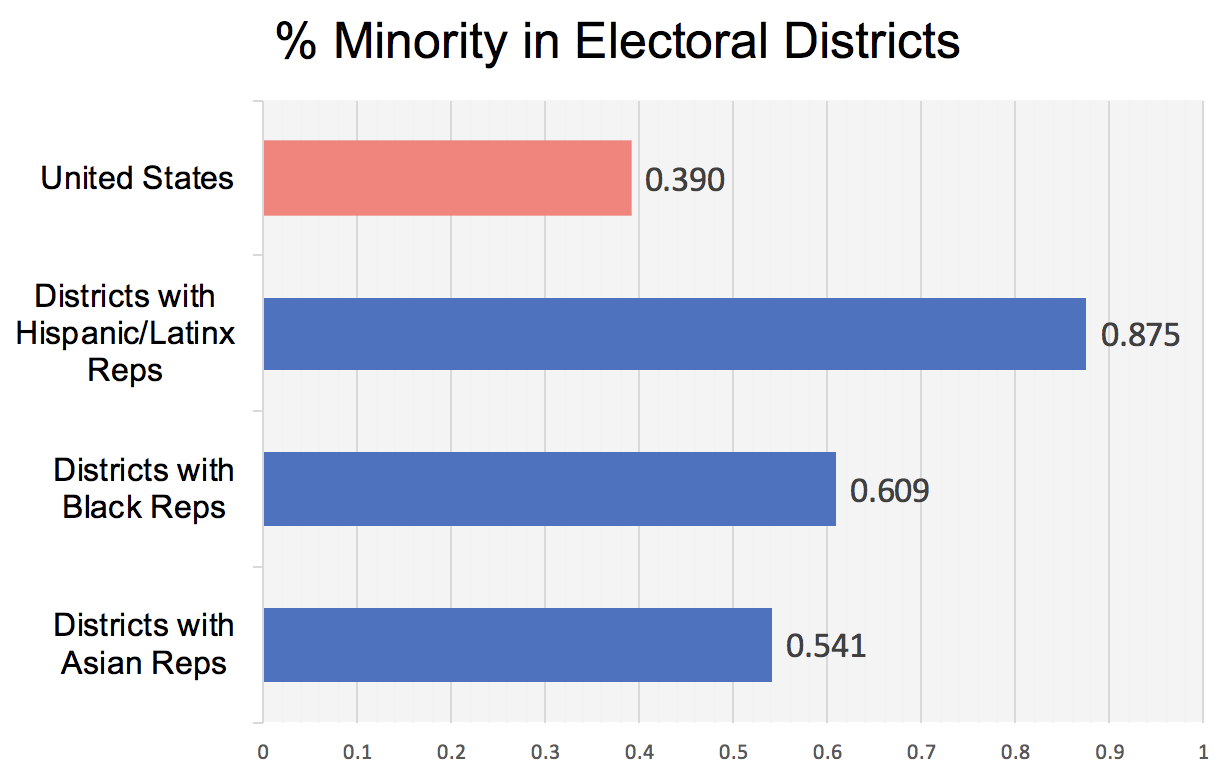
By itself, this statistic is unsurprising; voters hope to elect leaders who understand the community and will represent their interests, and racial identity can play a role. However, it is worth focusing in on those minority representatives who were elected in districts less diverse than the US. Candidly, Democratic candidates who hope to defeat Trump in 2020 will need to garner support from white supporters and districts. Focusing in on the minority candidates who successfully were elected in non-diverse districts can give an indication of what that takes.
There are 22 minority representatives from districts less diverse than the overall U.S. population. The below map illustrates where all the minority representatives are from, highlighting these 22 representatives’ districts in orange.
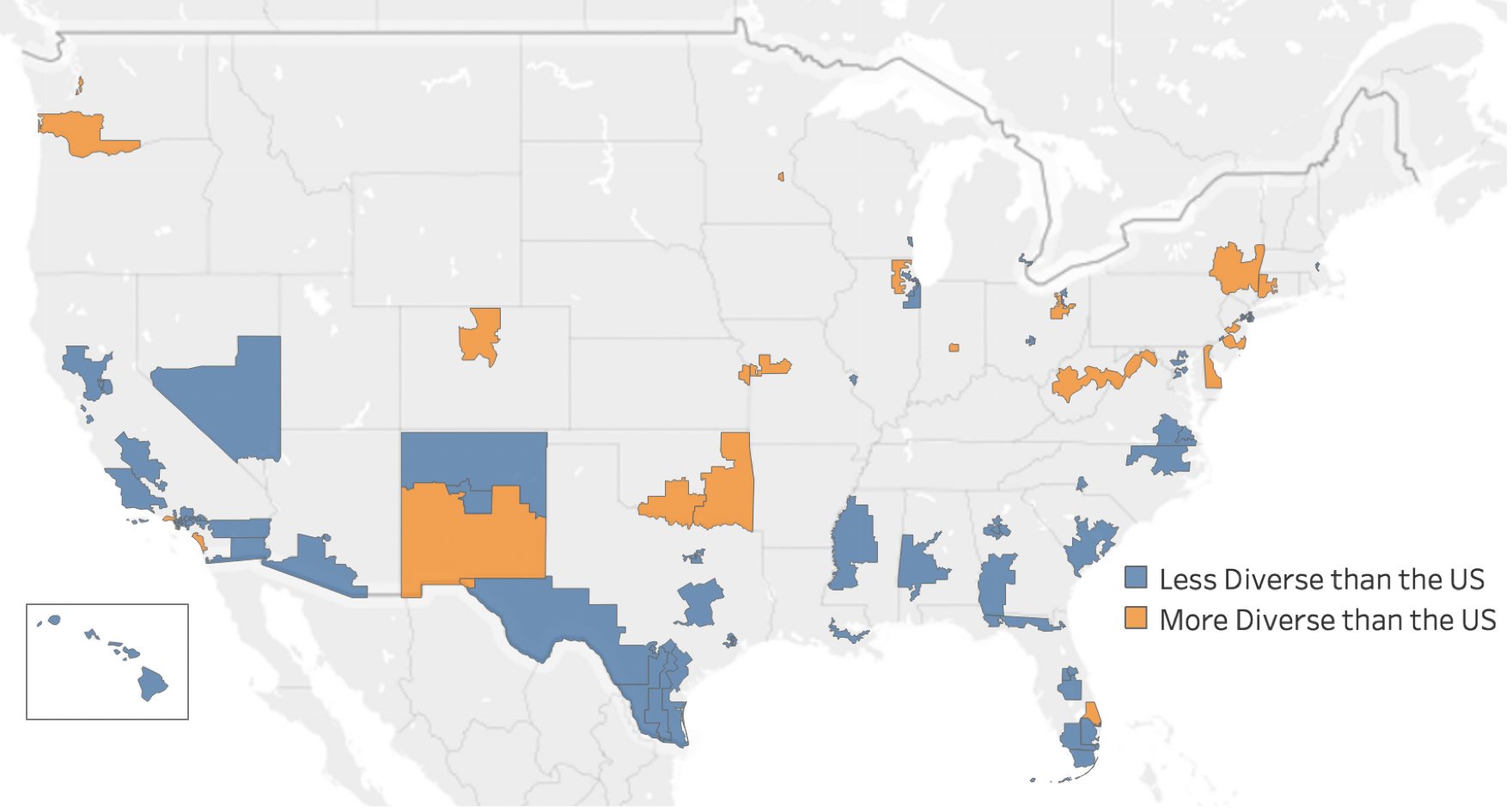
Of these 22, six were Republicans, leaving just 16 minority Democratic candidates who managed to win election in less diverse districts.
Who are these 16 Representatives, and what does it mean for 2020?
One of the most notable trends among these 16 representatives is their freshness to DC. Of the 16, only two have served more than three terms: Andre Carson (IN-7) and Emanuel Cleaver (MO-5). Over half of them were elected to the House for the first time in 2018. Considering that according to the Congressional Research Service, the average length of service in the House of Representatives is 9.1 years, these are striking figures.
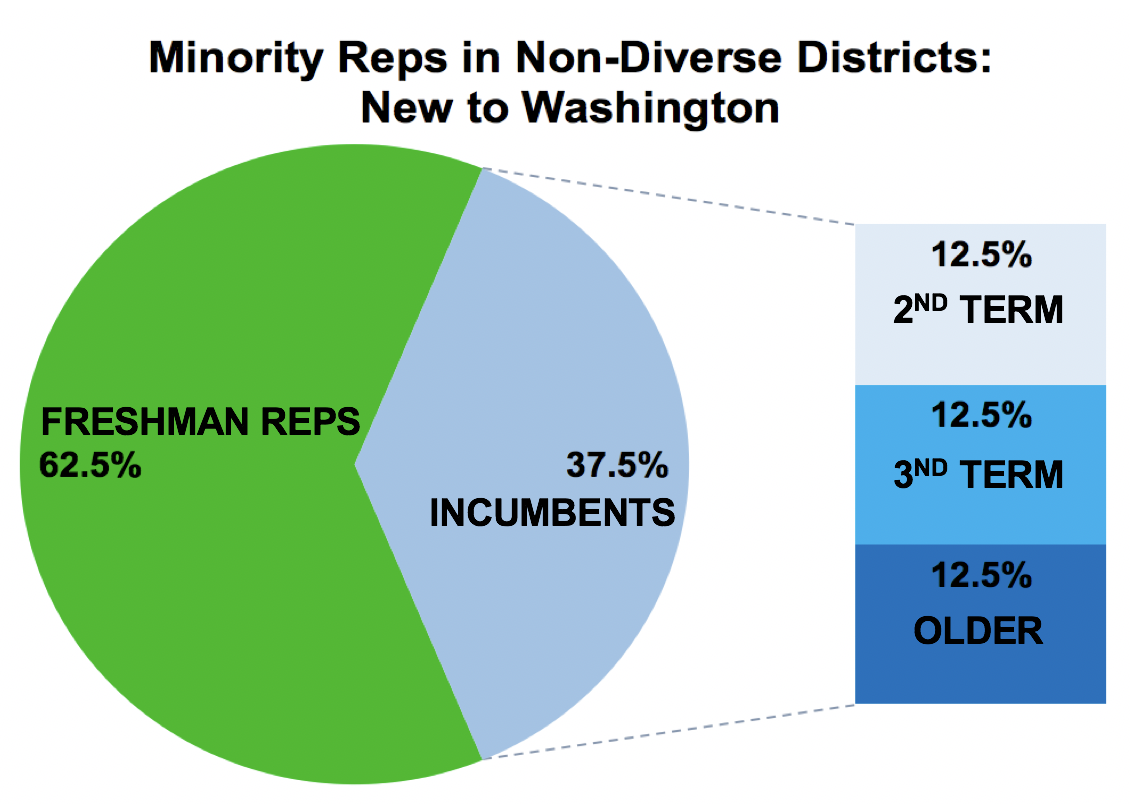
This is encouraging news for minority candidates—it’s an indication of the growing success of diverse candidates. However, it is also a testament to the massive historicism of the 2018 Midterm elections. The 2018 election was an anomaly in many ways, especially in voter turnout, and it is unclear if the massive success of Democratic minority candidates is the beginning of a trend, or simply an asterisk in the history books.
Ideology-wise, these representatives are fairly split. While there certainly are some moderates among these 16 representatives, others such as Joe Neguse and Ilhan Omar are among the most liberal representatives of the House. As seen in the below table, on key progressive-moderate disagreements, these representatives’ stances are fairly on par with all House Democrats.
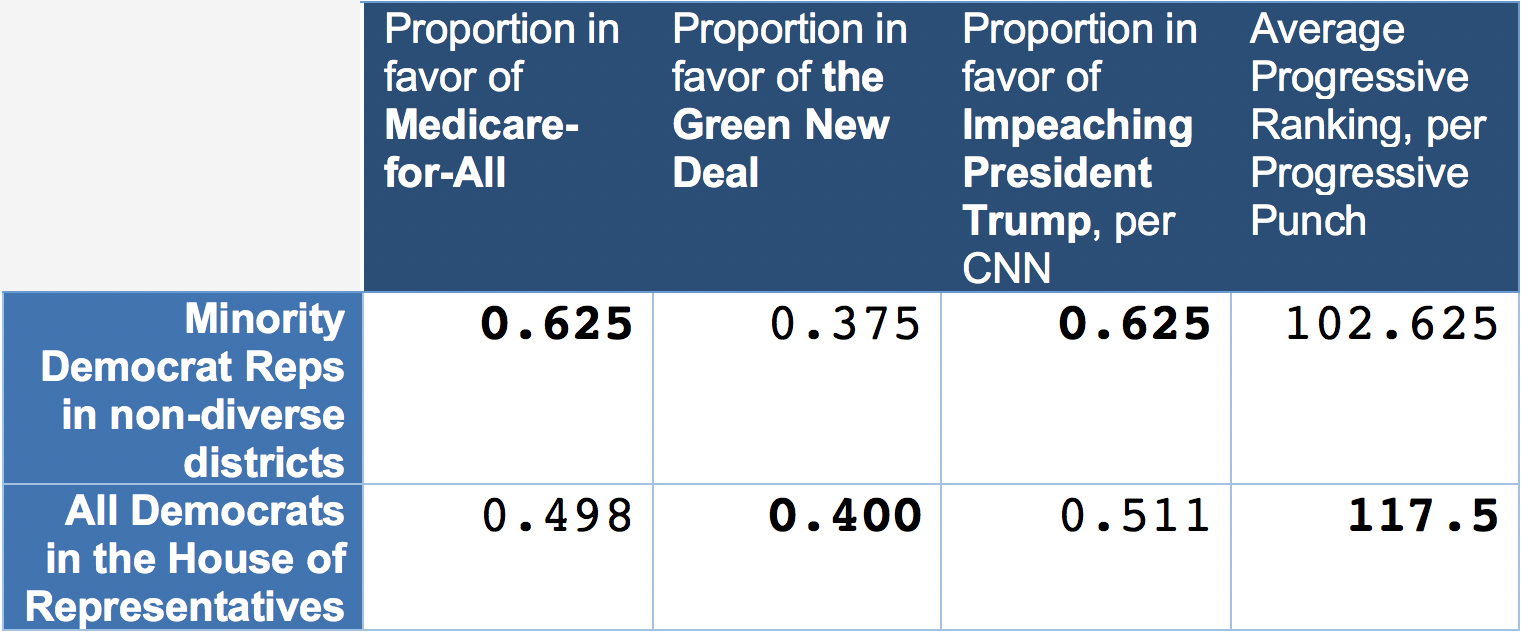
Although how “radical” a candidate’s ideas appear is certainly a factor in presidential electability, it is refreshing to see that ideology and race generally remain separate in these discussions; black candidates are not held to a separate standard where they must appear more centrist to compensate for their “blackness,” for instance. Plus, over half of these representatives are women, indicating that female women of color are just as electable.
Looking at the education levels, income, and ages in these sixteen districts also emphasizes the wide spread of districts these representatives come from. Compared to the entire U.S. population, these representatives come from districts both older and younger, richer and poorer, and more and less educated.1
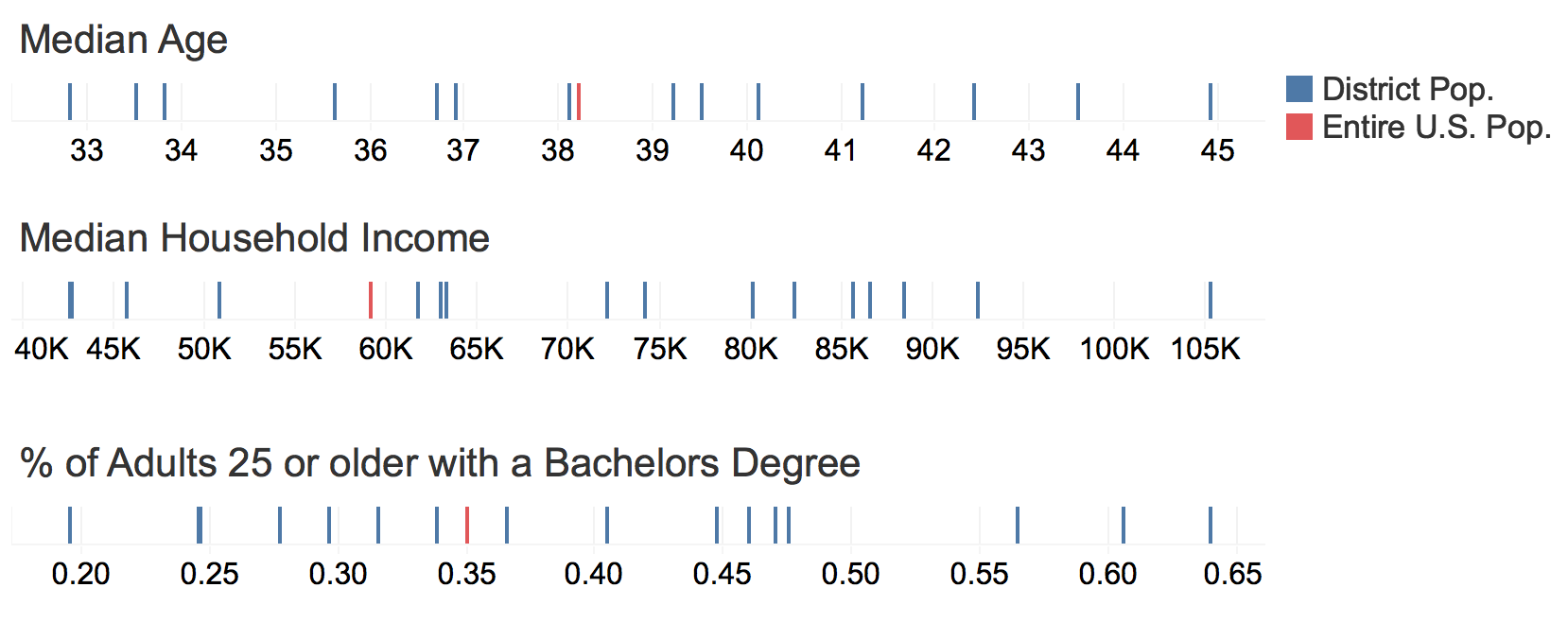
The current U.S. House of Representatives illustrates that Democrats can win in all types of districts, especially recent years and when turnout is high. Minority candidates hold appeal beyond simply wealthy, educated, young, or majority-minority districts. Moreover, minority candidates do not need to compromise their policy positions to appear more electable.
Conversations about race and electability have become an unfortunate reinforcing cycle; when the media questions the electability of minority candidates, voters become less willing to vote for them. Questioning minority candidates’ abilities to appeal to the broader American public sews unnecessary seeds of skepticism among primary voters. The media has a responsibility to turn the conversation away from identity issues and towards substantive policy debates. Only then will we find the best candidate—a candidate that will inspire the masses.
Data sets can be found here
1Data is from the 2017 American Community Survey 1-Year Estimate