POSTS
Democratic Campaign Ads: What 2016 Tells Us About 2020
Author: Lena Han
With the 2020 Democratic Primary heading into full swing soon, every candidate is striving to carve out their own unique place in the field. Although certain issues, such as healthcare, are universally popular and will undoubtedly become talking points for all the candidates, other issues will be important for candidates to differentiate themselves. Considering the emphases of Hilary Clinton and Bernie Sanders in their 2016 campaigns gives an idea of how 2020 candidates may develop their distinct identities.
Below are graphs categorizing every tv campaign ad aired during the 2016 primary. TV ads paint a window into how candidates appeal themselves to mass audiences and which messages they dedicate their time towards promoting.
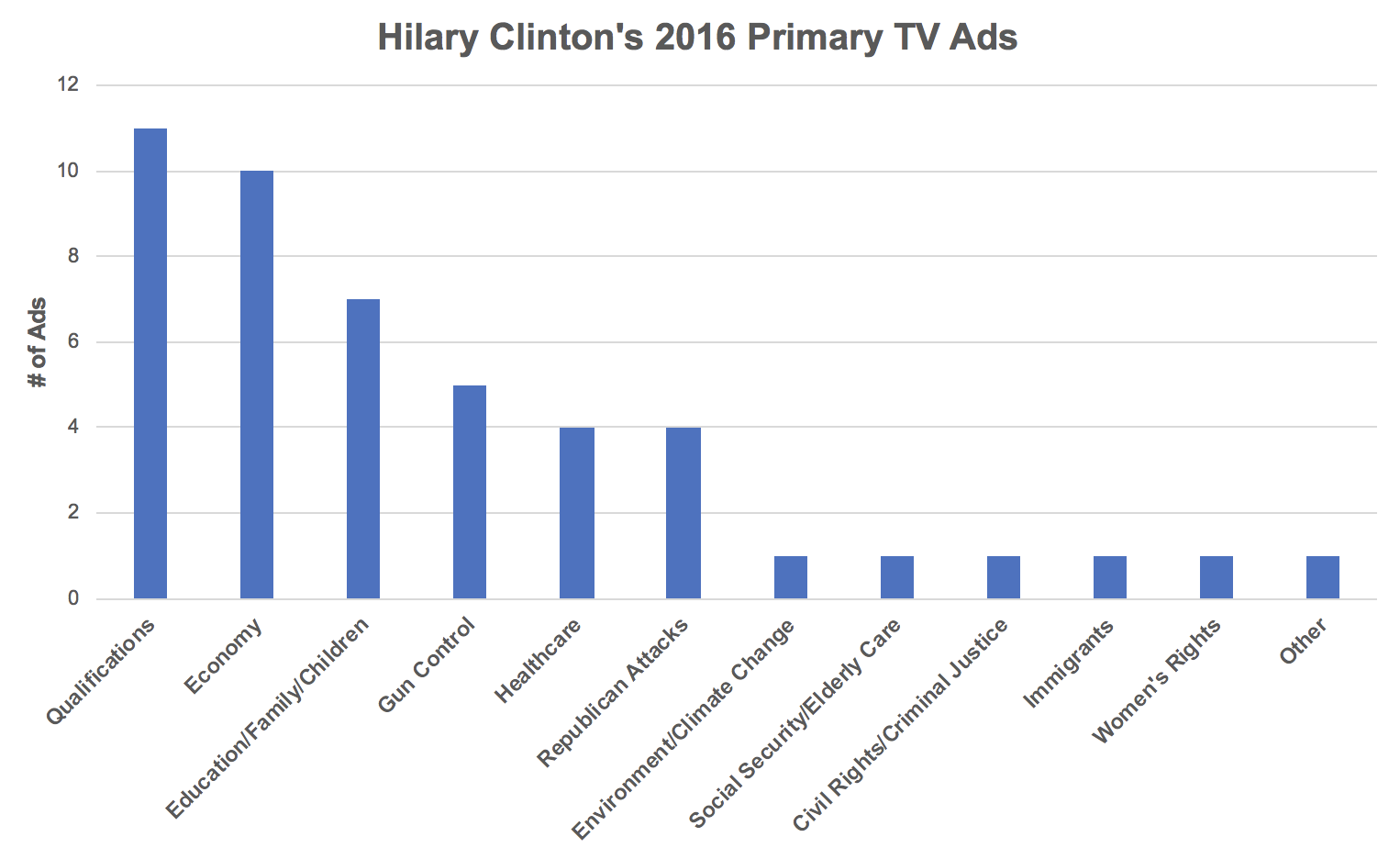
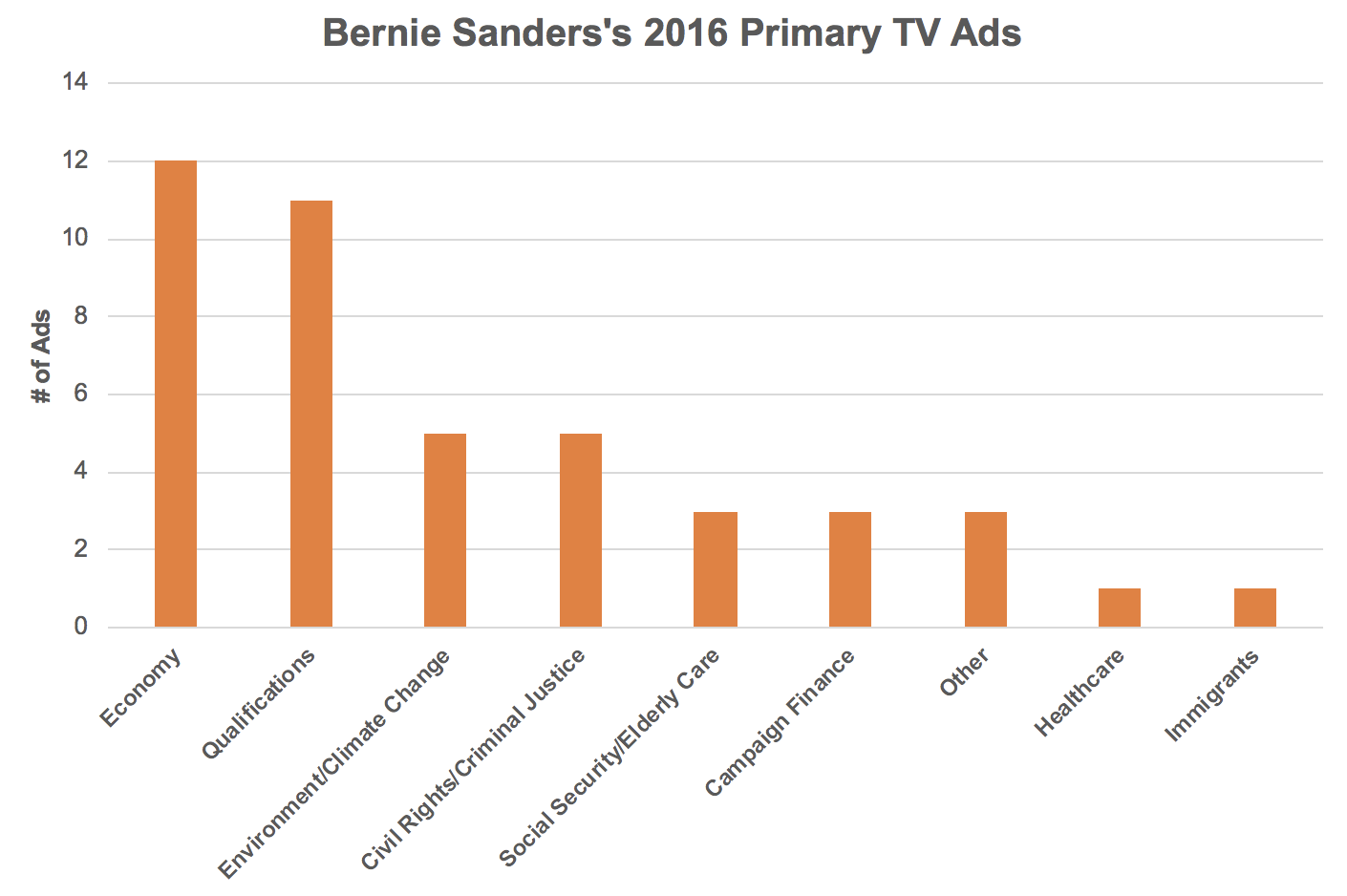 Data compiled from the campaign ad archive found here
A few trends stand out from this glimpse into Clinton and Sanders’s 2016 primary campaigns:
First, both Clinton and Sanders invested a huge amount of time focusing on the economy. This focus on the economy reflects the priorities of 2016 voters. According to Gallup polls, voters consistently ranked the economy as their top concern in 2016. In 2018 though, although the economy was still a primary concern of voters, healthcare surpassed the economy as the top election issue. Likely because the U.S. economy has continued to perform well, with low unemployment rates and high output, candidates’ economic visions have become less important for voters. Consequently, we can expect the focus of most 2020 campaigns to be on healthcare.
Despite both emphasizing the economy, Clinton and Sanders’ economic messages differed. Sanders repeatedly talked about his desire to hold “big banks” accountable and criticized the accumulation of wealth in the “top 1 percent.” He promised to focus his presidency on distributing wealth more equitably and punishing greedy corporations. Clinton, on the other hand, created a more optimistic message about giving opportunities to the middle class. Although she also criticized income inequality, her focus was on empathizing with the middle class’s struggles and creating jobs, rather than attacking the extremely-wealthy.
Within healthcare, 2020 candidates will need to seek unique messages. That means candidates cannot simply promote Medicare-for-all and hope to hit home when a dozen other candidates are doing the same; some candidates may focus on regulating pharmaceutical companies, decreasing hospital costs, or the implementation of Medicare. Creating a memorable and distinct message on healthcare will be critical for all 2020 candidates—no small feat given the vast primary field.
Second, perhaps unsurprisingly, both Clinton and Sanders kept their focuses on issues they had the most experience in.
Clinton spent a major portion of her campaign marketing herself as family-focused, a mother, and an advocate for children. She frequently spoke about giving every child equal opportunity to succeed through education and support. Much of this focus aligns with her previous work; as an attorney, First Lady, and public servant, she frequently defended children and women who were victims of violence. Sanders, on the other hand, spent more time focusing on civil rights; as a protest organizer for the civil rights movement in the 60s and 70s, he held a distinct viewpoint from Clinton.
Consequently, for 2020 candidates with extensive histories working on specific issues, they can be expected to emphasize their unique backgrounds. Kamala Harris, for instance, may focus on her experience with criminal justice reform, and Elizabeth Warren may focus on her background challenging big banks and creating progressive economic policy. Candidates such as Beto O’Rourke or Amy Klobuchar who have less experience in a single area will likely struggle to distinguish themselves from the rest of the field.
Even within a very small field, Clinton and Sanders consciously strove to differentiate their campaign emphases based on their backgrounds. Being able to point to distinctive experiences and ideas will be vital for 2020 candidates.